
Since so many readers ask me how and where I work, here’s a capsule version of a typical day in my writing life.
Welcome to Letters From Windermere, where I write about:
- HISTORY: mostly Western Canada history.
- WRITING: info about my writing journey.
- BOOKS: one book recommendation each month.
Letters From Windermere is free and will always remain free!
* * * * *
My Writing Life
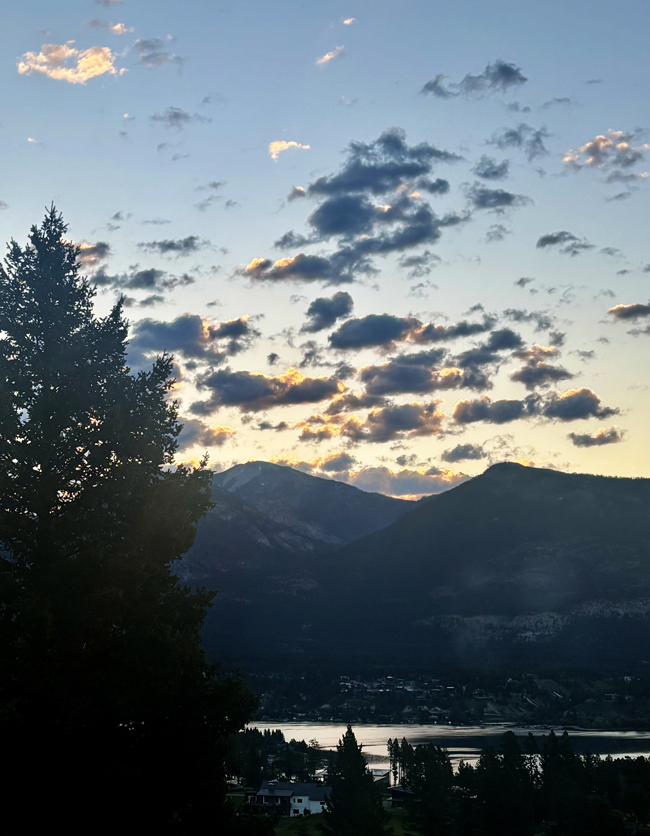
A day in my writing life as a historical fiction author begins early, often when the sun is still rising over Lake Windermere.
I wake between six and seven o’clock and answer emails and read headlines (trying not to get too upset or irate) while I drink coffee in bed. I then play online scrabble with two friends — one in Saskatoon and one on a farm near Breton, Alberta — plus undertake my daily word game challenges, Wordle and Quordle and Sudoku.
I then don my Writing Skirt — a comfortable old full-length charcoal gray skirt made of stretchy velour — eat breakfast, and start work at nine o’clock.
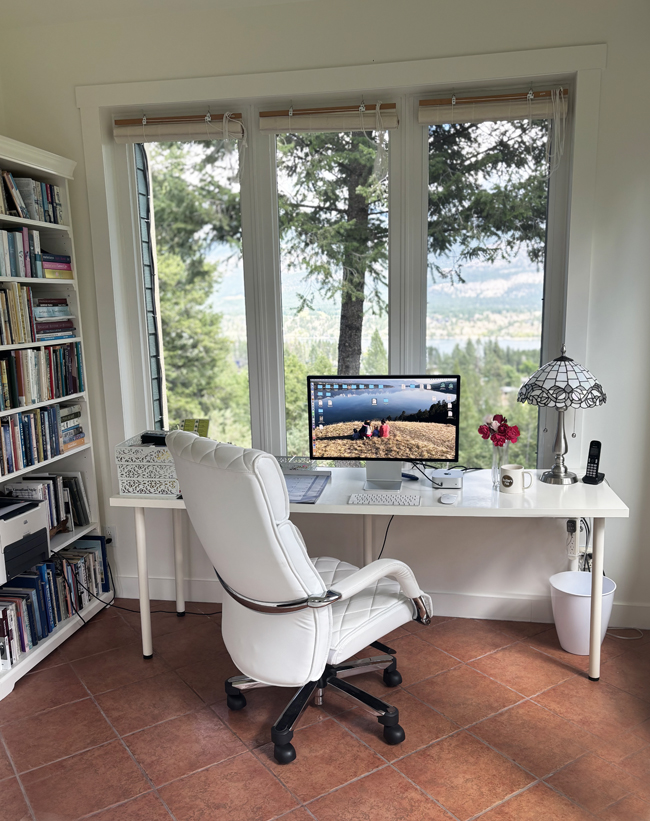
I wrote previously here about my writing space: My Home Office.
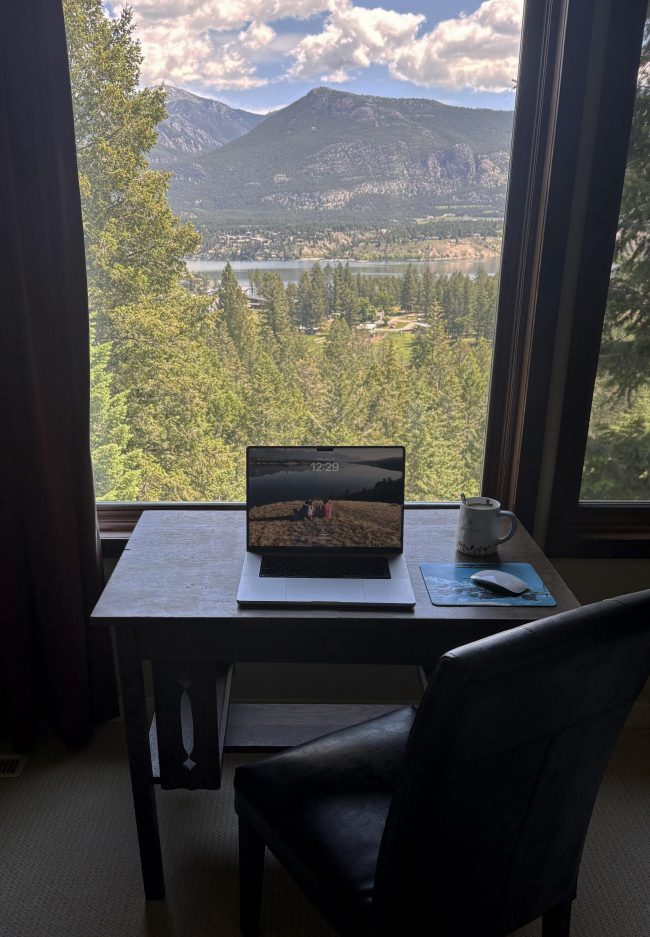
Recently I set up a second work station upstairs in my bedroom. My laptop is resting on an old oak desk that belonged to my grandfather Charles Light, the postmaster in Battleford, Saskatchewan for many years. It has sentimental value for me because I wrote my first novel, Bird’s Eye View, on this desk. I am truly blessed to have two such wonderful places to work!
Writing a book takes place in three stages: research, writing, and revision.
The Research Stage
When I’m researching, I gather information by reading dozens of books and websites for information, and making masses of notes. I file these in folders on my computer desktop labelled Landscape, Weather, Animals, Characters, and so forth.
I gather facts such as names and places and dates, plus what I call “nuggets” — interesting tidbits that lend authenticity. For example, while researching my homesteading novel Finding Flora, I found a fleeting reference to a land locater named Matthew Cook who wore a jacket woven from prairie grass. I can’t even picture what that might have looked like (not to mention what it felt like) but I had to include it!
The research stage takes a good six months and I always have to tear myself away to move to the most difficult stage, which is the writing.
The Writing Stage
While I am writing, I require complete and utter silence. I never listen to music or write in a public place. I am in awe of writers who can take their laptops into busy coffee shops and mentally block out the noise.
I try to write 2000 words each day, or one complete scene. A full-length book has about 100,000 words with some fifty scenes. I can’t write every day, since I have appointments and chores like everyone else, so you can understand why it takes several months to finish the first draft.
Note: I have used Artificial Intelligence for research (for example, I asked for a list of female names in Victorian England and it gave me some ideas), but I have never asked it to write anything for me.
The Revision Stage
Here’s where I take advice from my editor, who knows her stuff. Some writers don’t like to be edited, but I enjoy working with a professional and I always feel my work is better for it.
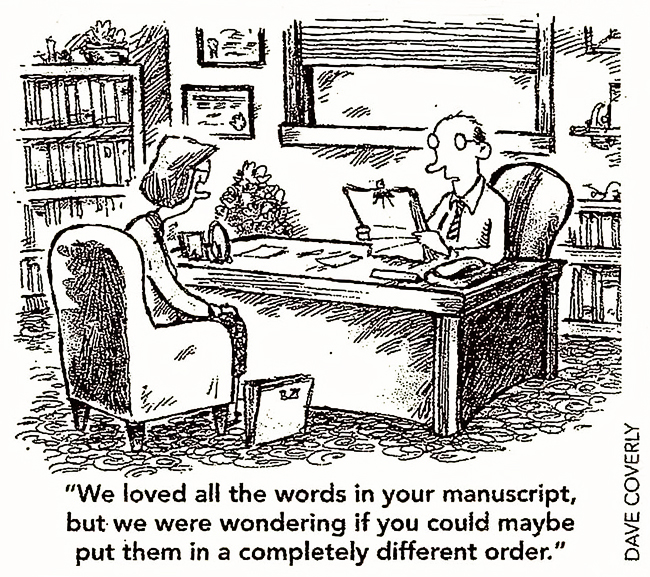
This stage involves rewriting almost every sentence — moving things around, fixing bloopers (I had one character drinking port, and two paragraphs later he was drinking brandy from the same glass) and generally trying to polish the wording (how many ways can you tell readers that it was a dark and stormy night?)
After My Work is Done
No matter which stage I’m tackling, I work until four o’clock, with two or three breaks for lunch and tea, and then do my daily physical activity for ninety minutes. Either I go outside and walk (my preference, since I have some of my best ideas while walking) or I ride my exercise bicycle and work out with weights while I watch television, something that doesn’t require a lot of attention. Currently I’m enjoying a British lifestyle series called Sort Your Life Out, which is free on CBC Gem.
At five-thirty my husband and I have one glass of wine each (white for me, since red causes insomnia) and talk about our day. At six o’clock we eat dinner, which he has prepared. I know — I’m extremely lucky to have husband who loves to cook!
After dinner we spend WAY too much time trying to find something to watch on one of our streaming services, and all too often, we give up in disgust and retire with our books. I read for a minimum of two hours every night, mostly fiction.
So there you have it — a typical day in my writing life. I would love to pursue my other interests — quilting, playing the piano, singing in a choir, volunteering — but I haven’t yet made those a priority. Maybe someday!
* * * * *
My Inspiration
There are children in both Wildwood and Finding Flora, inspired in part by my own children and grandchildren. It was when I was researching Wildwood, published eight years ago, that I became intrigued with homesteading. I decided to write another novel, this time about a single woman homesteading alone, and that became Finding Flora.
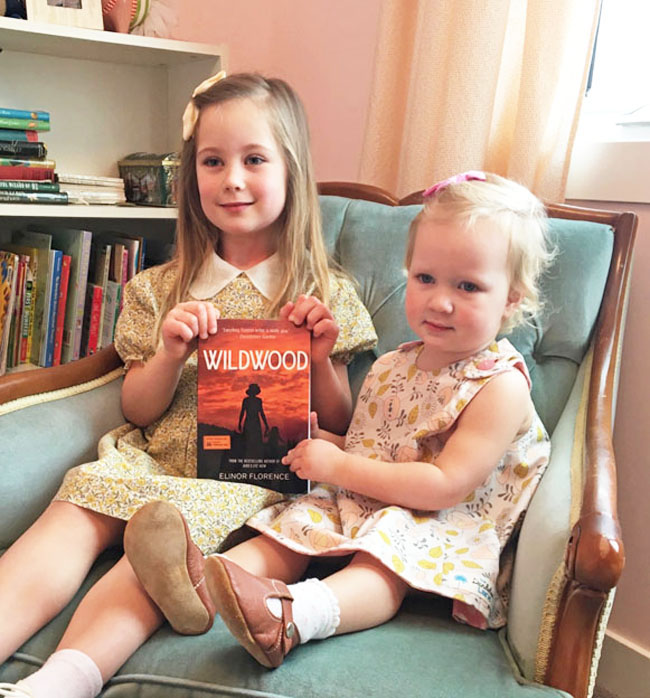
Back in 2018, my granddaughters Nora and Juliet posed with a copy of Wildwood.
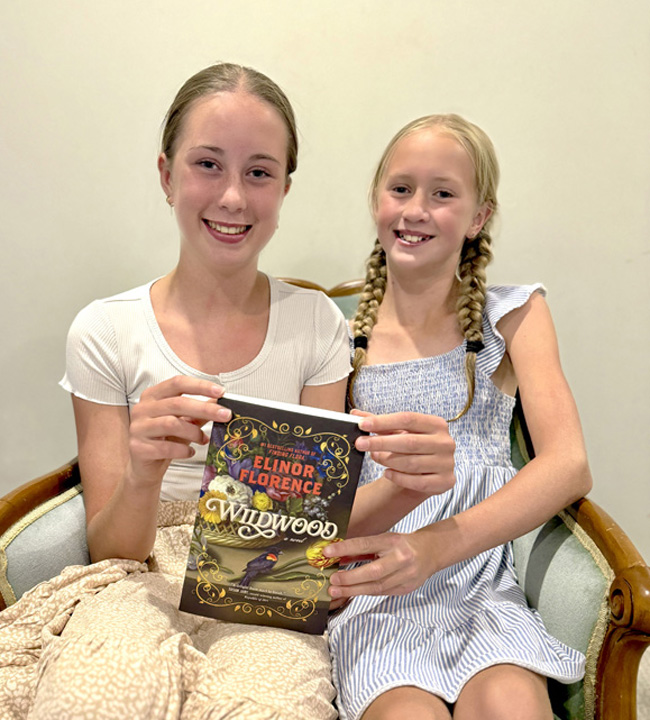
And here are the same two girls today, sitting in the same chair, holding a copy of the newly reissued Wildwood with a different cover! The book is dedicated to my three granddaughters: Nora and Juliet Niddrie, and Quinn Plaunt.
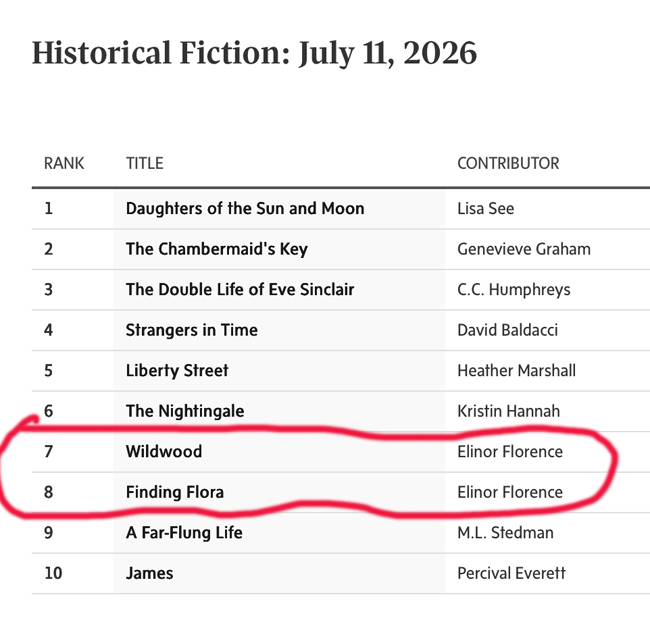
Both novels are still proving popular with readers. This clipping shows the Historical Fiction bestseller list from the Globe & Mail newspaper.
 * * * * *
A Very Special Gift
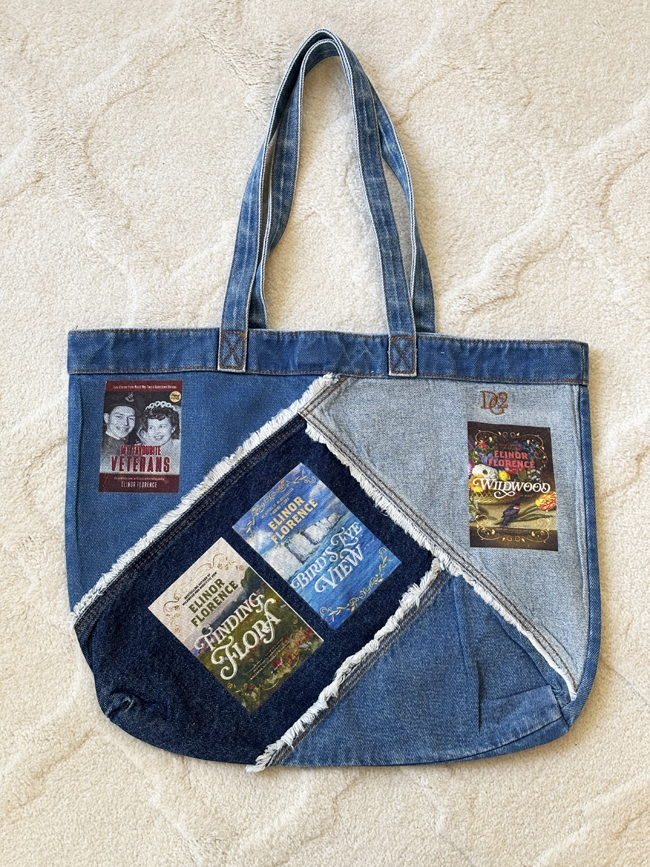
Imagine my delight when I opened my mailbox one day to find this gorgeous bag! It was created by Elizabeth Heinz, who has interviewed me several times for her program Coast Connections on the Community Cable TV channel on Vancouver Island. You can find the videos on YouTube by searching for my name.
The beautiful handmade gift was totally unexpected and I am showing it off everywhere. It features the four covers of my four books, and Elizabeth’s note told me that she had left room for the cover of my new book Grasslands, now in the revision stage and coming next April.
* * * * *
World Cup Madness
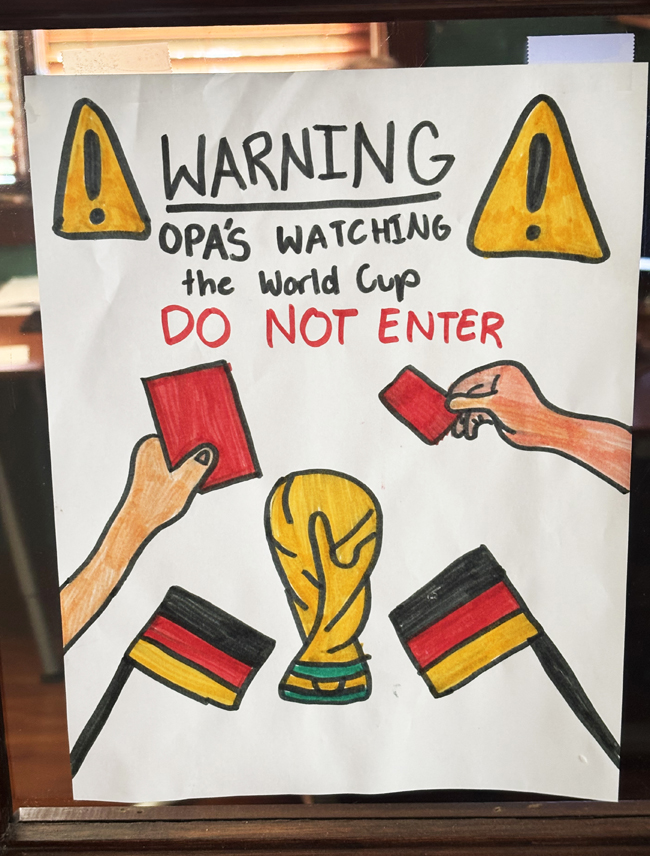
This month I tore myself away from my desk long enough to watch World Cup games with my soccer-mad husband. Although born and raised in Germany, he is a true blue Canadian who cheered for Canada first, then Germany, then Mexico (where we spend three months each year). Now we are down to the wire and have no idea who will win the final on Sunday.
The grandchildren also play soccer, and they know enough not to disturb their grandfather while a game is on television! They made this poster to hang on the door — and even included Red Cards (meaning a player did something so awful he is kicked out of the game).
* * * * *
Book of the Month
This new humorous crime novel will be released in September, and I urge you to preorder a copy at your favourite bookstore. I was privileged enough to read an Advance Review Copy since I have met the author Anthony Bidulka, who lives in Saskatoon, Saskatchewan.
Quant is the ninth in a series that was published several years ago, but I suggest you read this one first and then go back to the beginning of the series, which I did. The cover copy pretty well sums it up!

* * * * *
Friends, when you receive this I will be preparing to rub shoulders with other readers and writers at the Saskatchewan Festival of Words in Moose Jaw. The event runs from July 16 to 19, 2026 and I hope to see some of you there!
Affectionately, Elinor

