
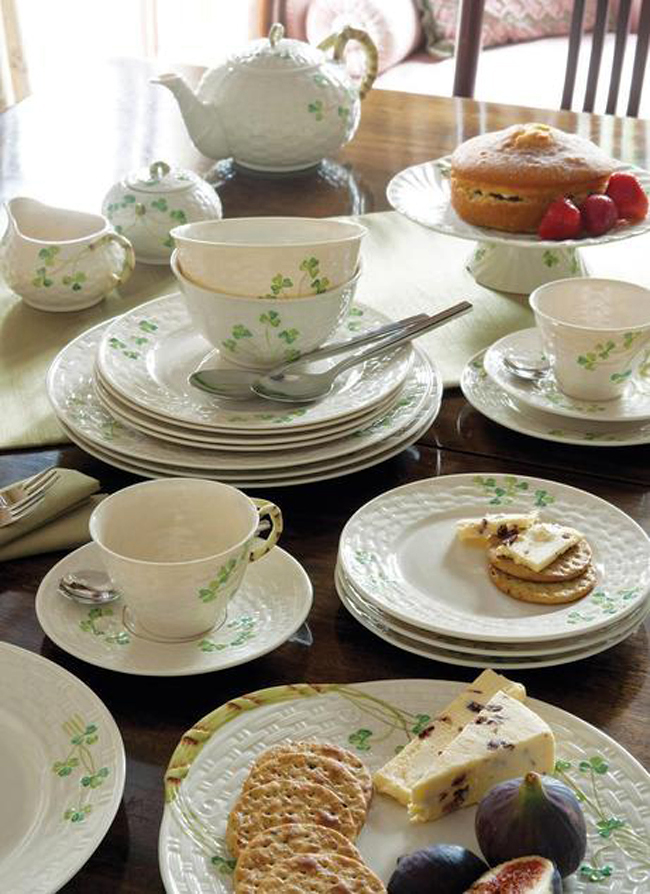
In the farmhouse kitchen described in my novel Wildwood, my Irish heroine Mary Margaret receives this Belleek shamrock tea set from her grandmother as a wedding gift when she emigrates to northern Alberta in 1923.
* * * * *
My Childhood Home
I grew up on a farm about fifteen kilometres east of North Battleford, Saskatchewan.
Our solidly built home was constructed by the Department of National Defence during the Second World War, one of the barracks buildings on this former British Commonwealth Air Training base. For more history: Growing Up With Air Force Ghosts.
My parents lived here until 1980, then moved to British Columbia, and used the farmhouse as a summer residence. Meanwhile, my brother Rob and his wife Wendy took over the farm and raised their four children in a new house in the same yard.
My father died in 2003, but my mother continued to spend her summers there. Since she passed away in 2017, the house has been empty.
Of course, I always enjoy staying in my old home, and I took these photos during my last couple of visits.

* * * * *
Farmhouse Kitchen Tour
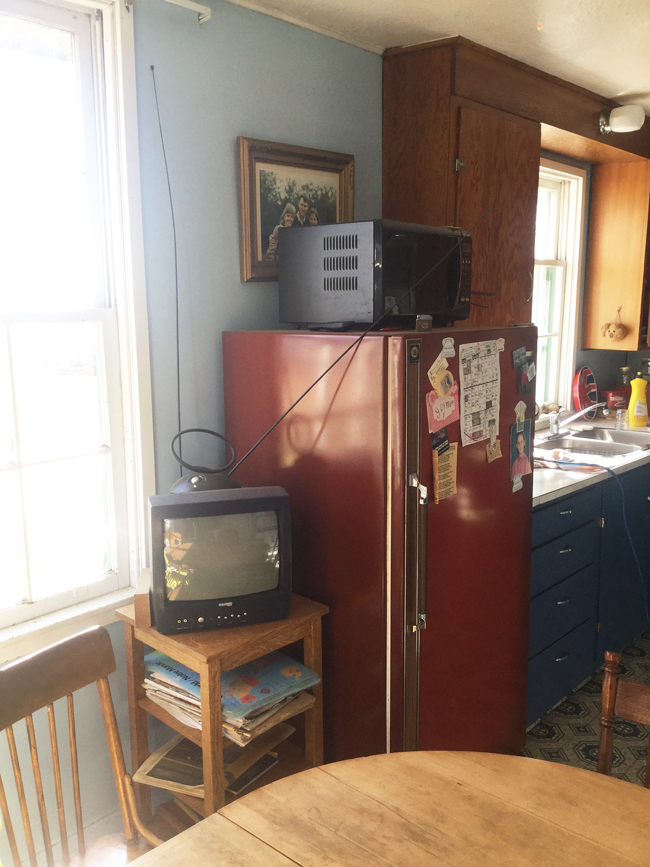
Our kitchen was truly the heart of the home, being bright and spacious — and often the only warm room in the house. Years ago, my mother painted the lower cabinets blue, to match the blue and white linoleum. That brown refrigerator from the 1970s still works like a charm.
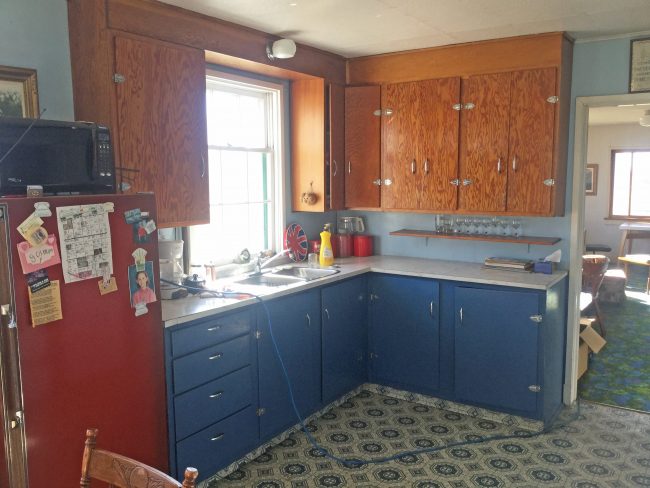
You can see that the kitchen has plenty of floor space.
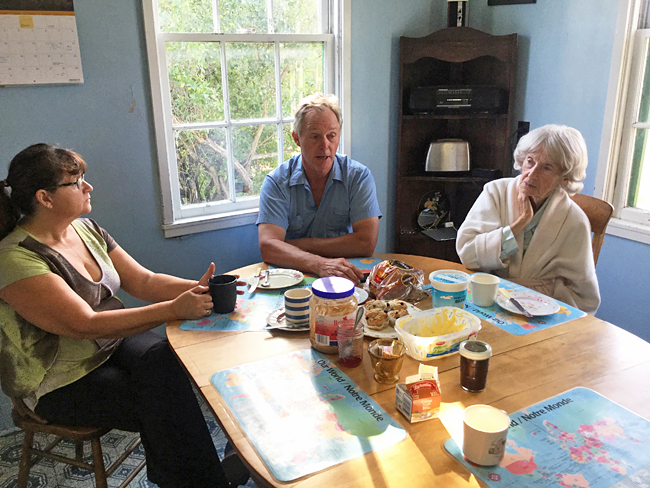
The wooden kitchen table is where everyone congregates. Here my brother Rob describes the current crop conditions (always the main topic of discussion on a grain farm) over breakfast, to his wife Wendy Florence and my mother June Florence.
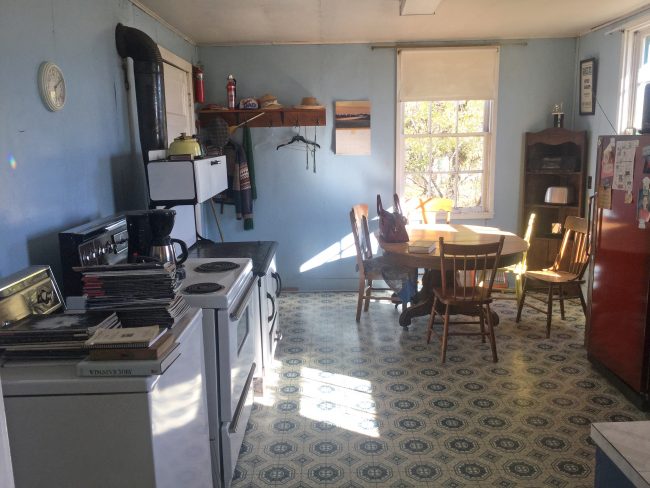
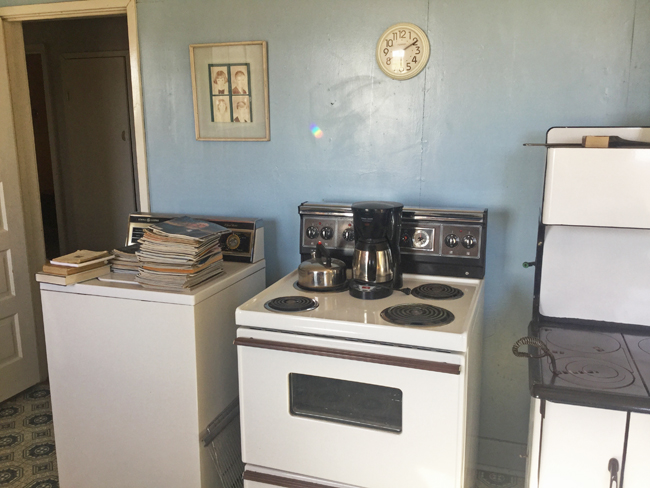
Lined along one wall are the old cookstove, the “new” (circa 1975) electric stove, and the electric washing machine. There never was a clothes dryer in the house, and my mother hung the laundry outdoors.
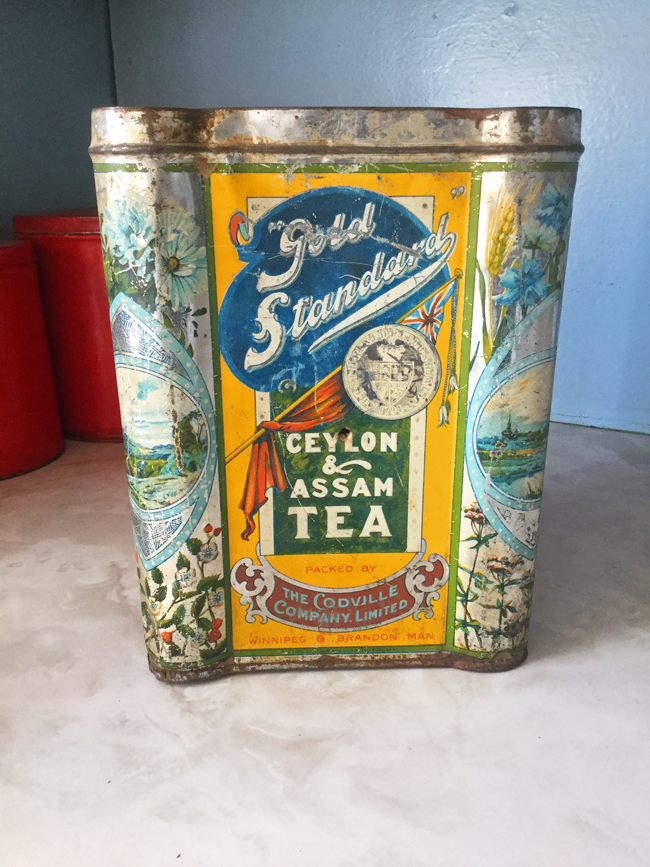
She kept her wooden clothespins in this old tea tin.
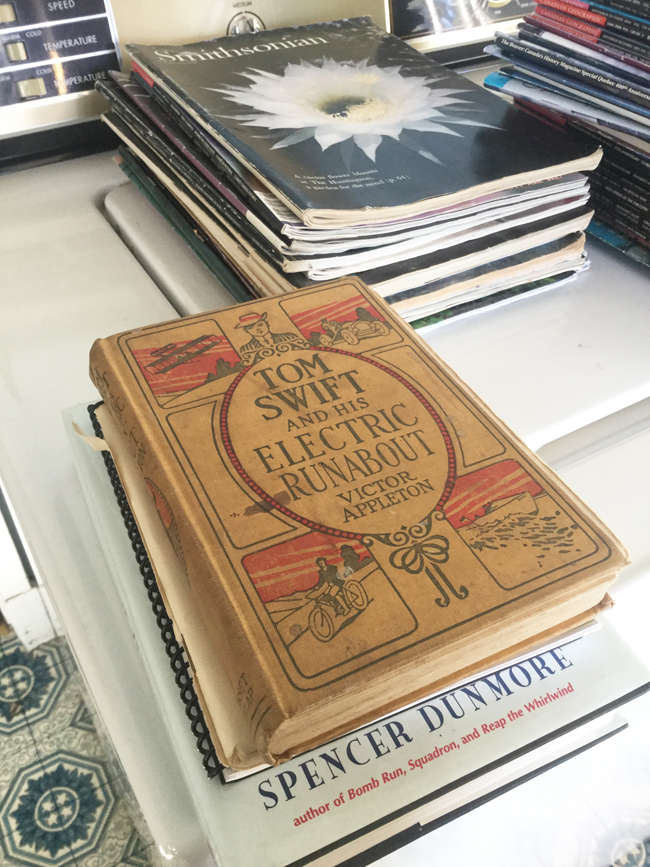
My parents loved all types of reading material indiscriminately, and there are piles of books and magazines and newspapers all over the house. These are still stacked on the washing machine.
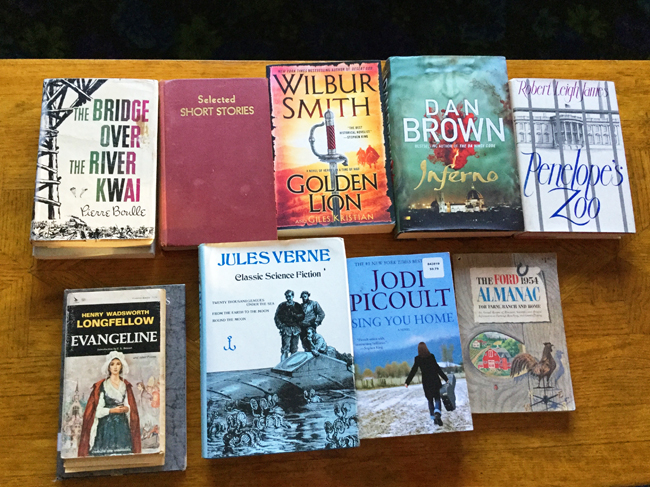
I found this pile on the coffee table and spread them out to look at the titles. I’ve already taken a few gems for my own collection.
The legal bookcase in the living room has a complete set of Funk & Wagnalls encyclopedia on the bottom shelf. The telephone table is also piled with books.
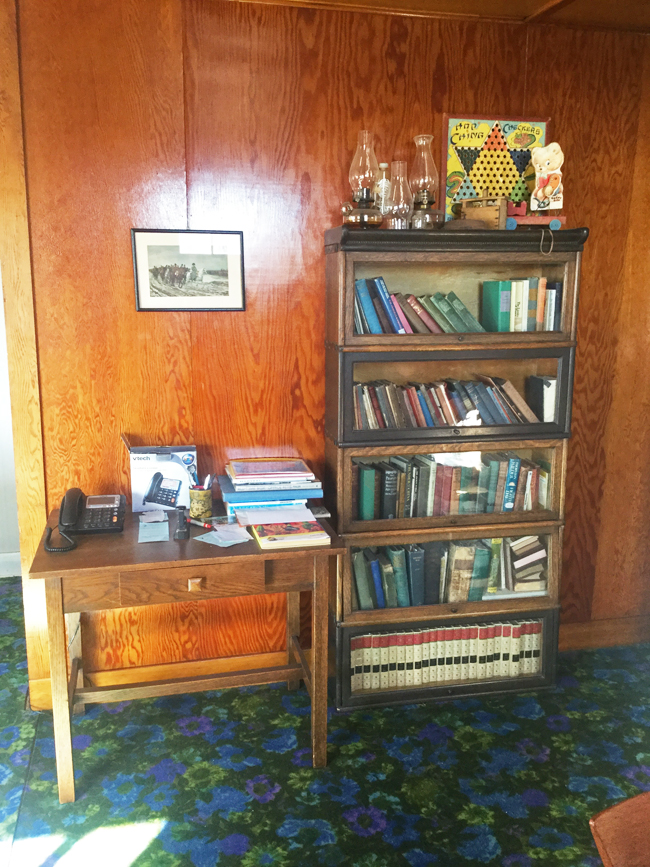
On the top shelf are my brother’s old Teddy Zilo pull toy, some coal oil lamps, an inkwell, a wooden butter mould for shaping blocks of churned butter, a game of Chinese Checkers, and a sad iron.
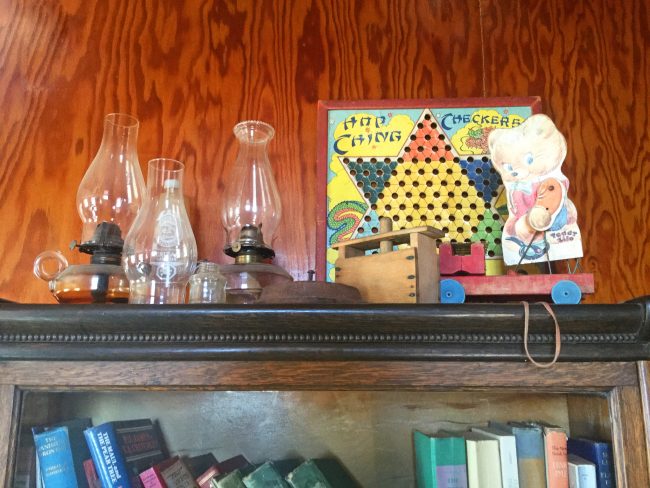
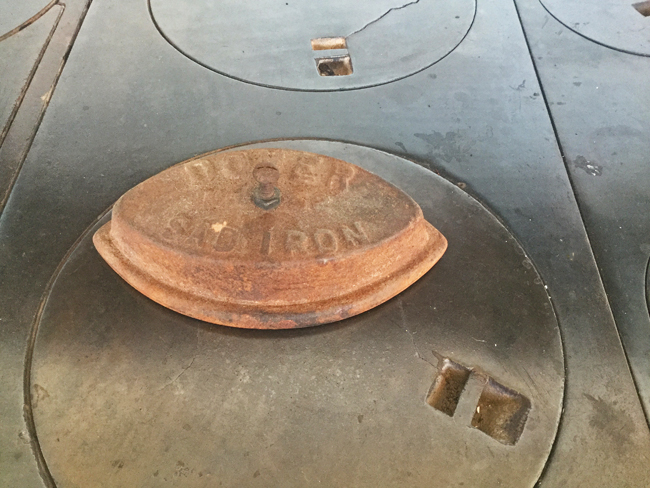
The sad iron found its way into my novel Wildwood when Molly is forced to use it to iron her skirt.
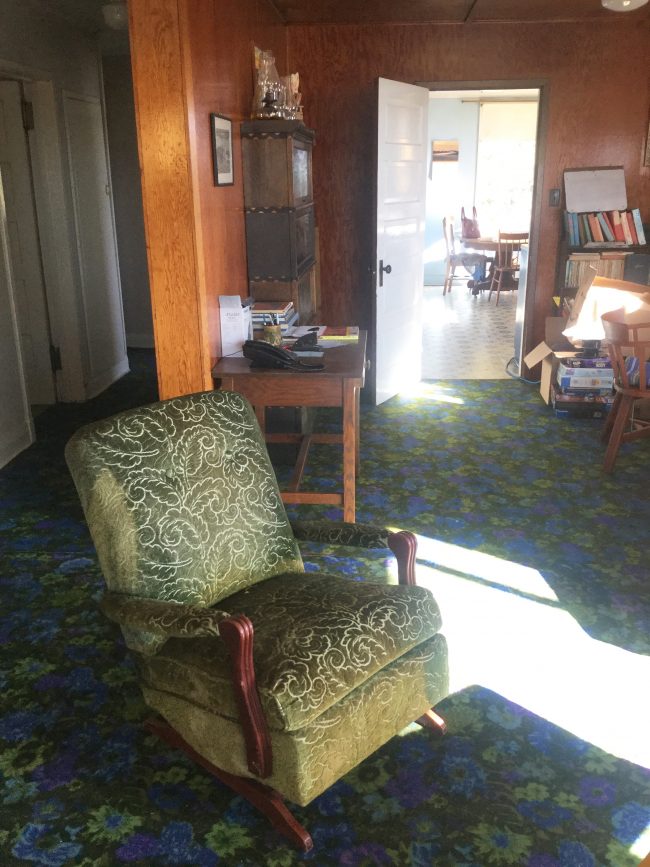
Here’s a long view of the open kitchen door, from the living room.
The old cook stove is still perfectly functional and my mother always lit it on cool mornings to warm up the kitchen. Here my brother Rob says goodbye before heading out to the field.
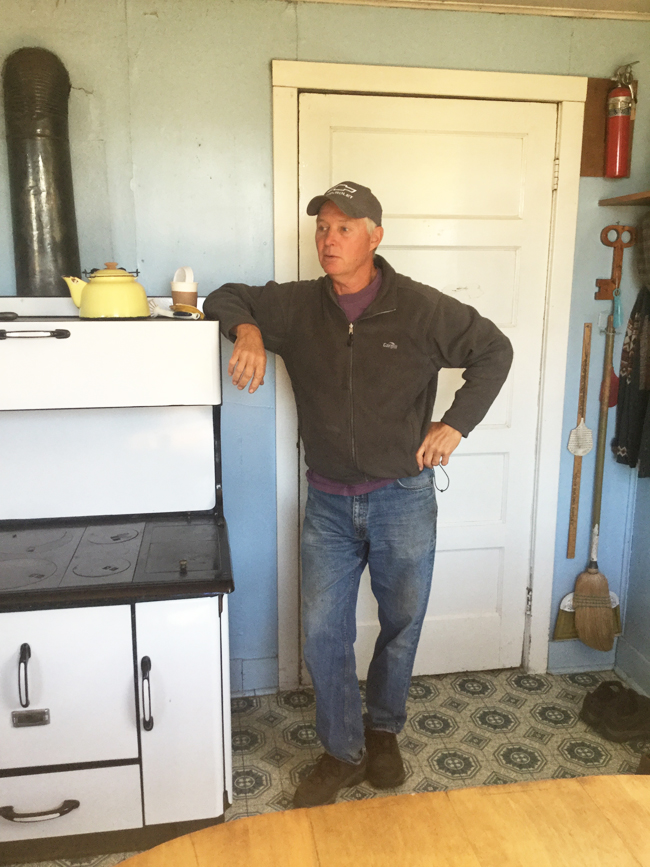
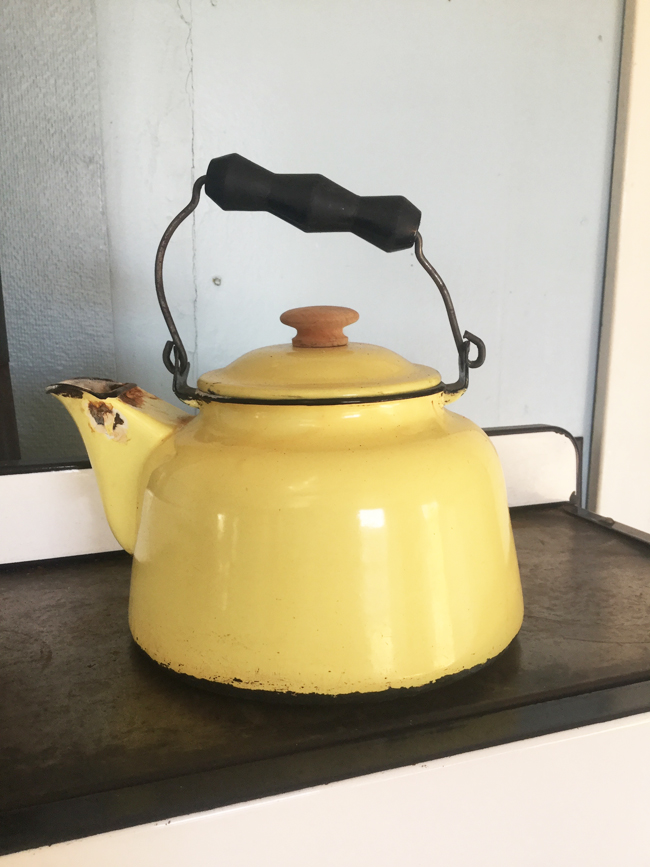
Here’s a closer look at the old enamel kettle which is usually simmering away on the back of the stove.
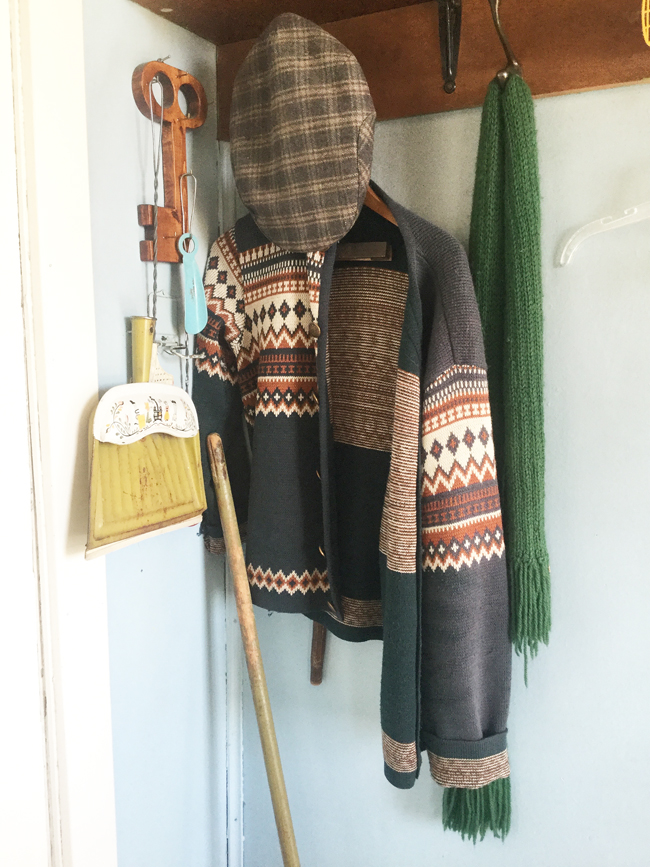
In the corner, my Dad’s favourite sweater and flat cap are still hanging on the coat rack, along with a dustpan and a shoe horn.
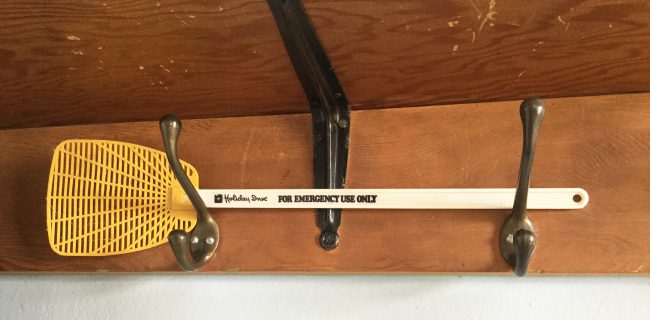
A fly swatter is also found here, bearing a somewhat mysterious inscription: “Holiday Inn: For Emergency Use Only.” Nobody seems to know why the Holiday Inn would have a fly emergency, or how my parents acquired this one!
On the corner shelf unit is a combination radio and tapedeck, a curling trophy, and a toaster. Above it hangs an old hotel sign that my parents found amusing.
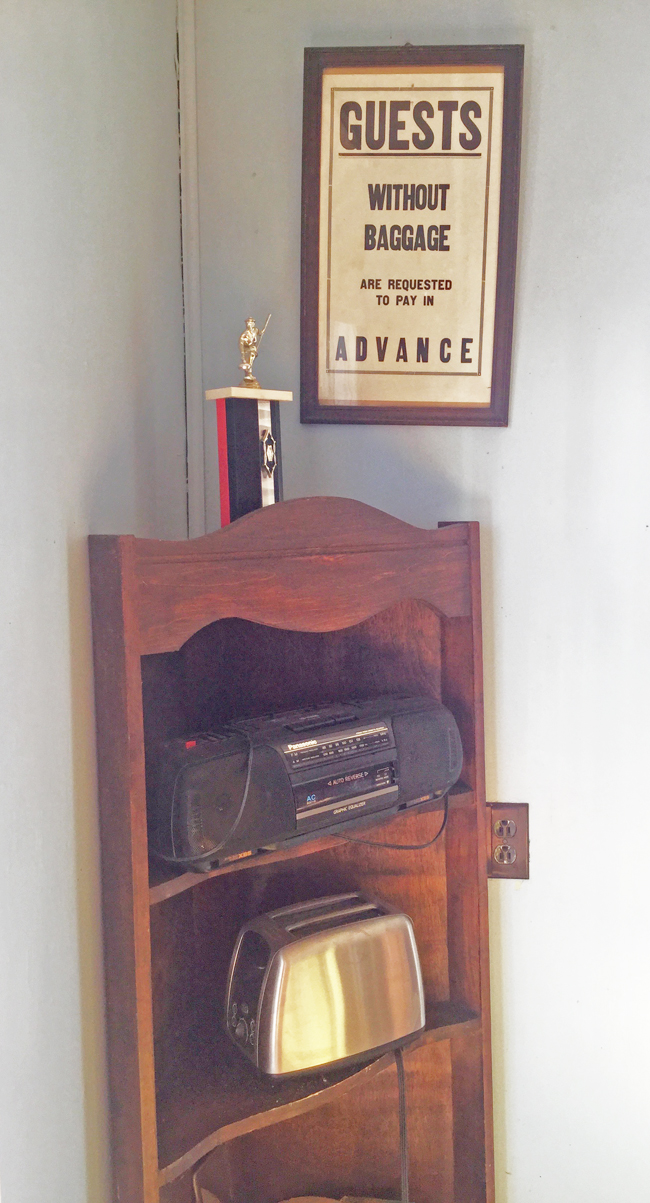
On the bottom shelf, not seen in the above photo, is this shabby Christmas card: “The mair I see of some folk, The better I like my dog.” (My parents weren’t antisocial, although it sounds that way!)
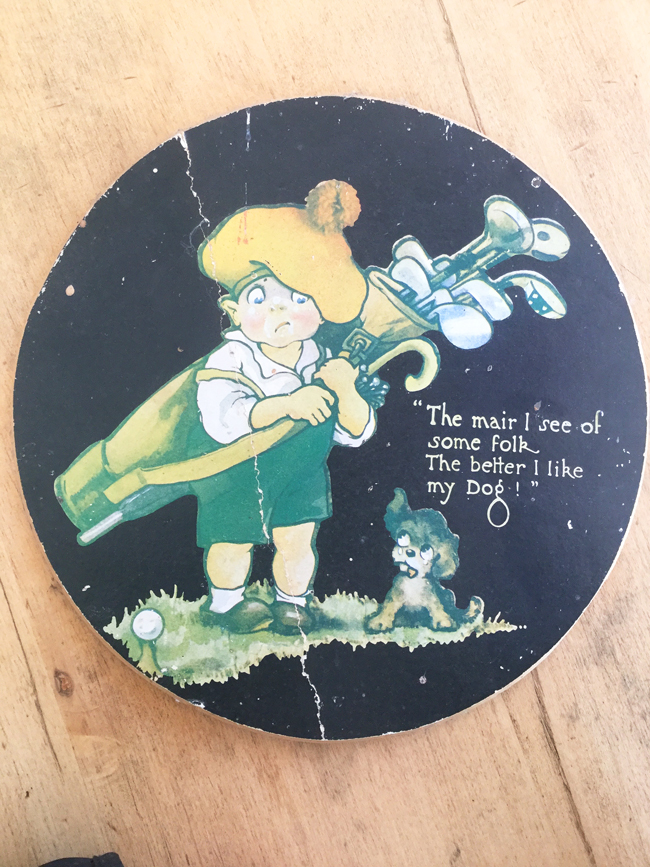
On the back of the card is this message: “With much love and best wishes for a happy Xmas and a happier and more prosperous new year. From Mother.” That was my paternal grandmother Mary Margaret, who died in 1956. I named my pioneer heroine in Wildwood after her.
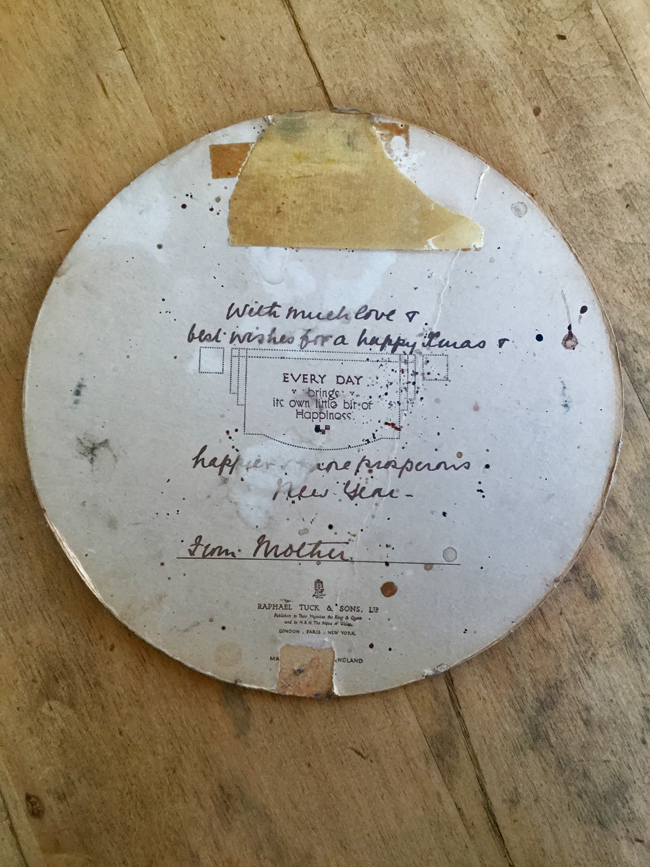
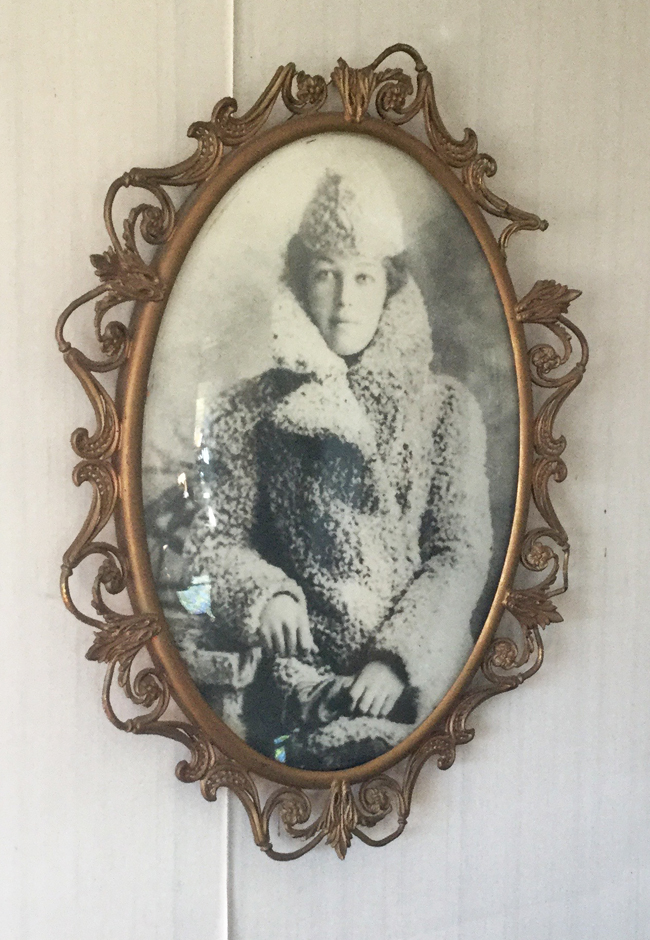
This photo of Mary Margaret herself hangs in the living room.
And beside the refrigerator, believe it or not, is a small black and white TV set, complete with rabbit ears which people are always fiddling with to improve the reception.
My mother stoutly maintained she did not mind watching Canada AM in black and white, when the hosts looked like ghostly figures discussing the news during a Saskatchewan snowstorm!
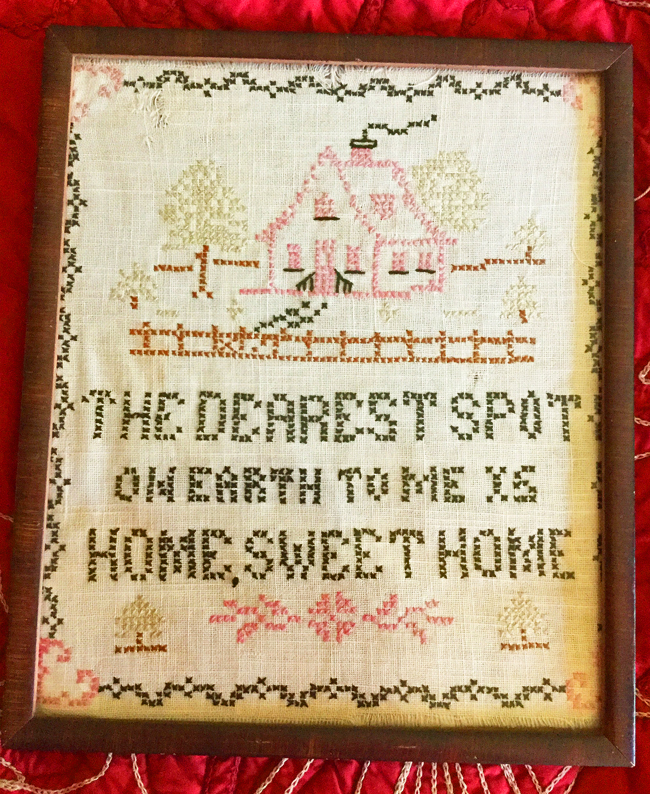
This cross-stitch sampler hung over the kitchen door. It was the first one ever made by my mother, at the age of eleven years. Later she became an accomplished needlewoman and I have many beautiful teacloths and napkins embroidered by her.
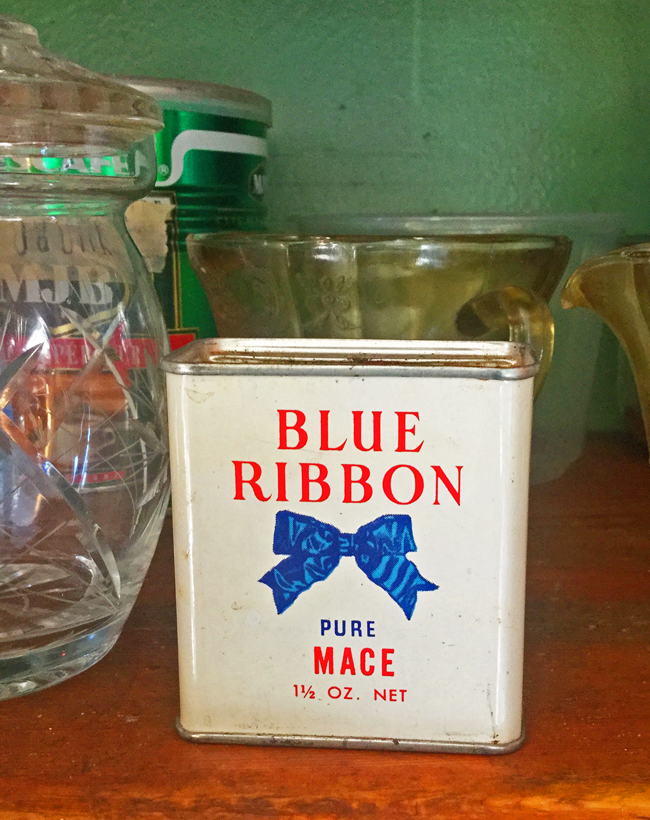
Several items that should probably have been thrown out years ago are still sitting in the kitchen cupboard, including some ancient spices. (Does anyone still use mace?)
A few things even date back to my father’s childhood!
My grandmother believed that kids needed Vitamin D, so she gave them this stuff. I have never tasted it, but apparently cod liver oil is quite disgusting – and can you imagine it flavoured with mint?
My own mother dosed us in the 1950s with something called “Polymulsion.” It was flavoured orange and equally repulsive. She bought it from the Rawleigh man. I’m sure some of you remember the travelling salesman who drove around to rural farmhouses with cases full of household wares.

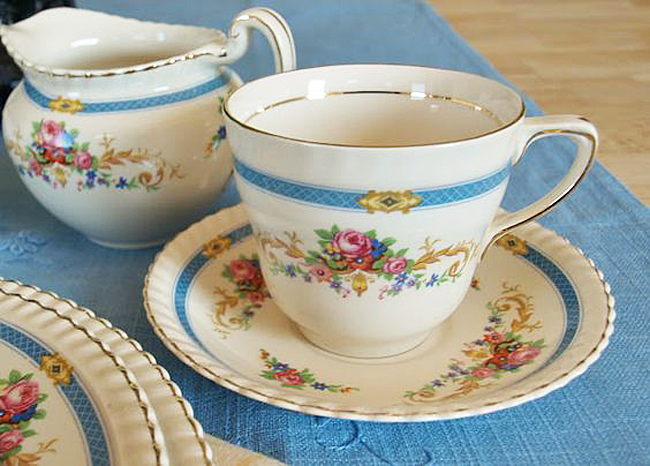
Although my mother never had any Belleek china, I used another china pattern from my mother’s kitchen cupboard for my novel — the Old English pattern, made by the Johnson Brothers.
One of the important treasures that my heroine Molly finds in the cupboard (once again, my grandmother had a first edition) is this old Five Roses Cookbook, first published in 1913 and once the most popular cookbook in Canada!
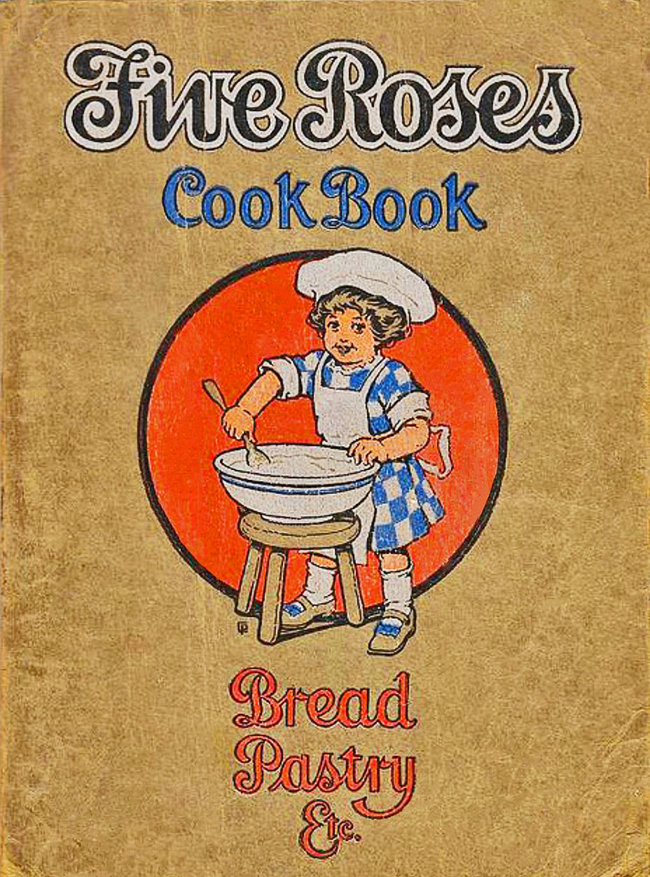
I wrote to the copyright holders and received permission to reprint a few recipes from the cookbook into my novel, Wildwood.
Friends, I hope you enjoyed my Farmhouse Kitchen Tour. I’ll bet these photographs sparked some childhood memories of your own kitchens.
* * * * *
Recommended Reading
Thinking about my childhood home reminded me of a very interesting memoir published in 2018.
The nearest farm to ours was owned by the Nelson family, who moved into town when their six children were young. It wasn’t until later that I became acquainted with Linda, who stayed in North Battleford and became a school teacher.
I highly recommend Linda’s own memoir. She wrote and self-published it after her retirement, and it describes her life a Little Person, resulting from a condition called Achondroplasia. It’s a very honest and moving account.
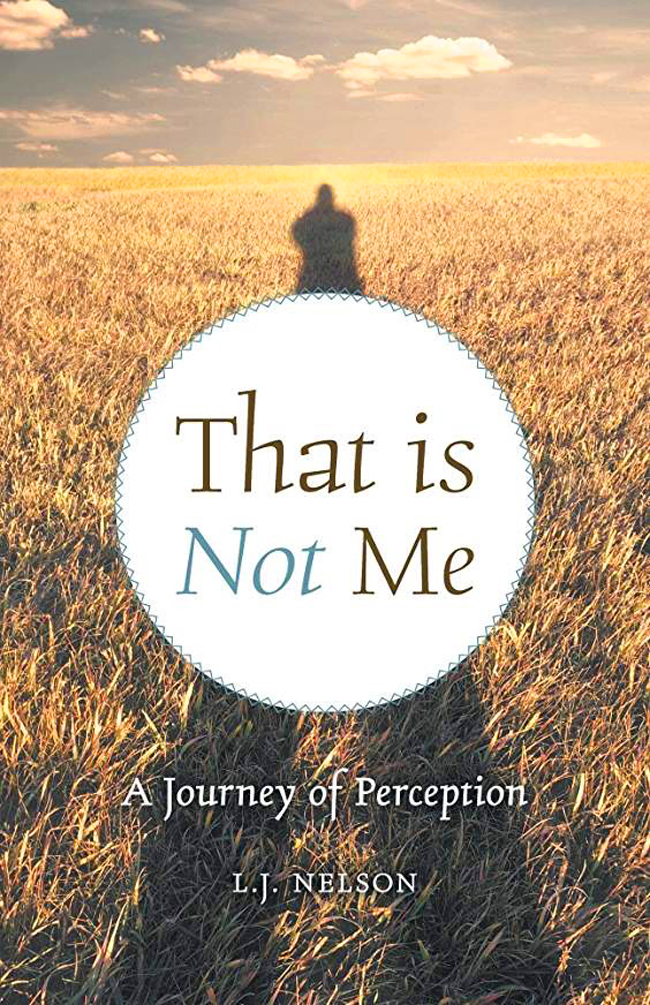
Linda provided her own photograph for the cover design, which I think is one of the best book covers I have ever seen, as it captures both the theme and the title brilliantly.
Order the book online from Amazon here: That is Not Me: A Journey of Perception.
* * * * *
Writers are often asked to define their “target audience.” I’m tempted to borrow a funny description from another author who said her typical reader was “an intelligent woman with a cold.”
But after some thought, I decided that my readers are People Who Love the Past. If you know anyone who fits the bill, perhaps you would be kind enough to recommend my blog.
Affectionately, Elinor


